
Housing Assistance: 10 Facts About Use of Public Housing Assistance among Autistic People
We would like to hear about you and your thoughts on these reports and how you use them. Please provide your thoughts and email address before accessing the reports - we will not use it for other purposes, and providing your email address is optional.
Executive Summary
There is a critical lack of published facts on the need for financial assistance to support affordable housing among people with intellectual and developmental disabilities (IDD) in the U.S., including those on the autism spectrum.
This report helps to fill that gap. People who make policy decisions, or advocate for them, need the information in this report to address the need for housing assistance among households with autistic members.
A cascading set of problems exists.
- The housing crisis in the U.S. affects people with IDD. Whether a person is seeking to rent or buy a home, there is a critical shortage of available and affordable housing. Between 2020-2022, the cost of rent increased by nearly 25%. This housing crisis is more dramatic among people with intellectual and developmental disabilities (IDD), including autistic people, who may lack both places to live and the services they need to live independently in a community.
- Autistic people are often at a financial disadvantage. They may not have access to the money or help needed to rent or buy a place to live. In the U.S., there is a lack of financial assistance to support the costs of renting or owning a place to live. This leaves many autistic adults and others vulnerable to isolation, homelessness, abuse, and financial stress.
- Medicaid provides funding for selected services and supports that assist people with IDD to live in a community, like life skills training, personal assistants, and transportation. But Medicaid does not typically cover the actual costs of housing, like assistance with rent or mortgage; although a few states are experimenting with use of Medicaid waivers to assist with rent for short periods in special situations. Medicaid also doesn’t support people to find housing. However, the Centers for Medicare & Medicaid Services (CMS) did clarify in 2021 that there are some limited circumstances in which states can use Medicaid funds to support housing. We will talk more about actions states can take to support autistic people who receive Medicaid and HUD benefits in a future report.
- There is no single housing program or policy that addresses all housing-related needs that autistic people may have. These needs include services to support community living and financial assistance for rent or home ownership. The problem is that programs and policies that affect people with disabilities often exist in “siloes” – meaning that supports for community living exist separately from financial supports for housing, versus assistance to find appropriate and accessible housing.
- This report addresses financial assistance for rent or home ownership. We will address services to support community living in a future report.
- The U.S. Department of Housing and Urban Development (HUD) is the primary source of financial assistance for housing in the U.S., including housing for people with IDD. To date, only one study has been published about autistic people who receive HUD assistance, since HUD doesn’t collect information about specific disabilities. We can learn more by linking HUD data with Medicaid data to identify autistic people who are using HUD benefits.
- To better understand receipt of HUD assistance among autistic people, and to better plan for providing this financial support, there needs to be consistent and reliable data about:
- the types of funding autistic people receive for housing,
- where autistic people who receive public housing assistance live, and
- details about who gets this assistance.
This report presents new findings about the use of public housing assistance among autistic people.
Key Findings
Autistic children and adults are significantly affected by the housing crisis.
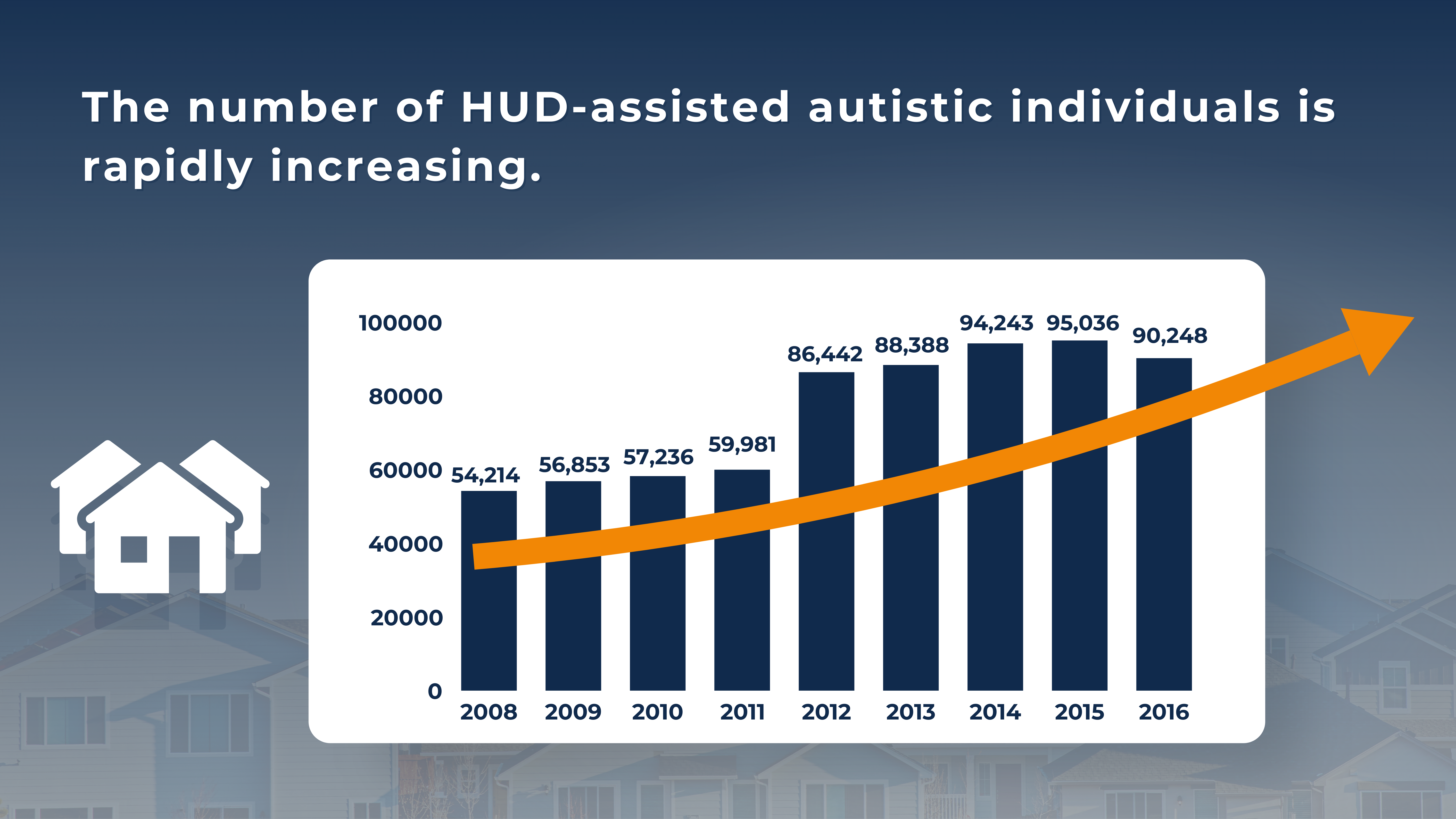
- The number of autistic people who lived in households that received HUD assistance increased almost every year between 2008 and 2016. The number of autistic people living in households receiving HUD assistance increased from 54,000 in 2008 to nearly 90,250 people in 2016.
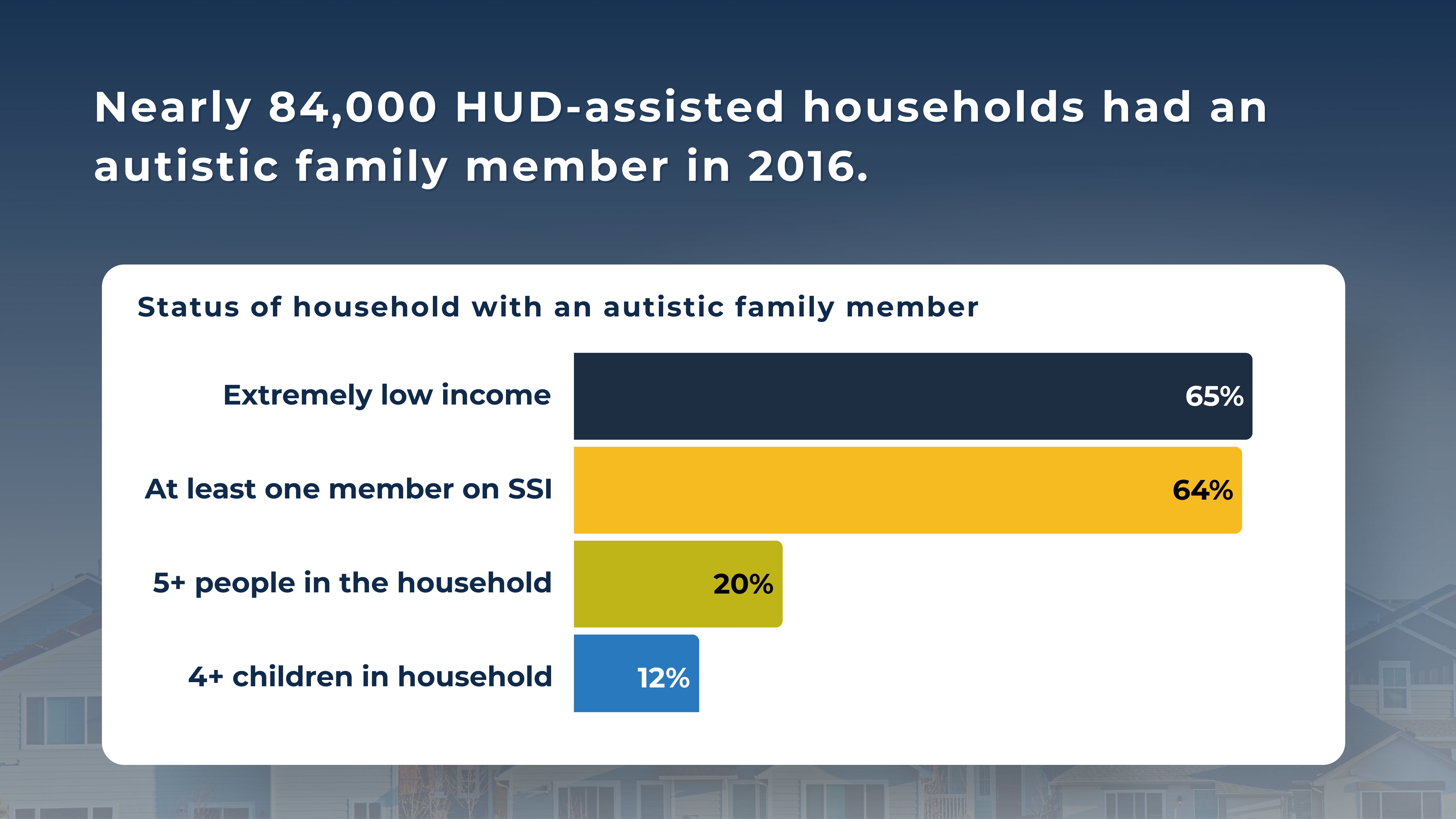
- In 2016, HUD assisted over 90,000 autistic people living in nearly 84,000 households.
Autistic people are among the many Americans that are homeless.
- In 2016, at least 2500 autistic people experienced homelessness before receiving HUD assistance.
Public housing assistance through HUD serves autistic people in the same way it serves other people in the U.S.
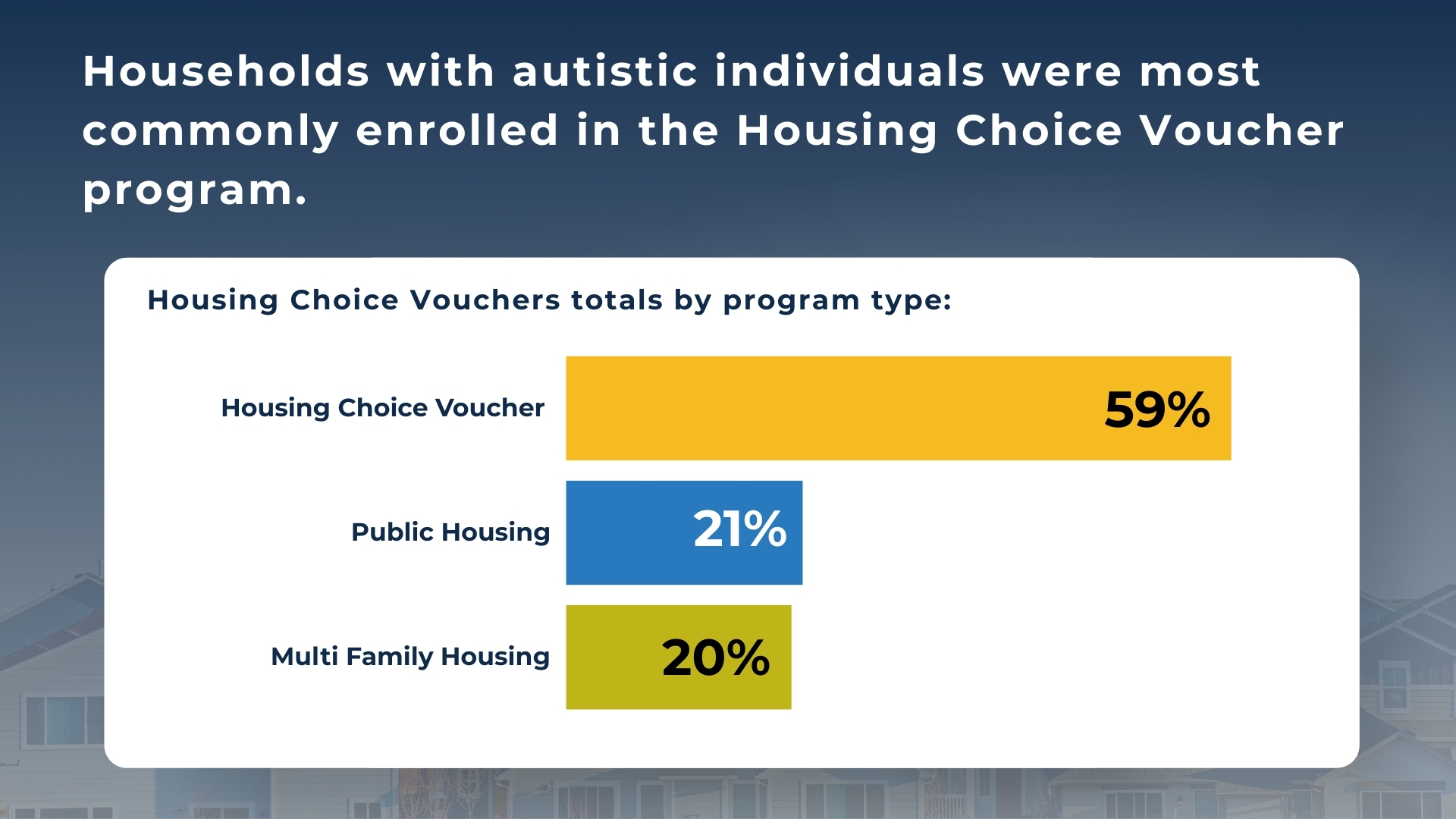
- Housing Choice Vouchers were the most common type of HUD assistance among households with autistic members. This pattern was similar to the general population of people who receive HUD assistance.
- Autistic individuals received an average of 6.75 years of HUD assistance across the different program types. This length of time is similar to other households in the U.S. that receive HUD assistance – typically around 6 years.
The households with autistic members that HUD serves are highly vulnerable.
- 65% of HUD-assisted households with autistic members had extremely low incomes (below 30% of the area median income). For example, if median household earnings in the region were $70,000, then members of an extremely low-income household together earned less than $21,000.
- HUD-assisted households with autistic members were often headed by females.
- HUD-assisted autistic people were more often children.
The housing instability that some autistic people experience can have serious impacts on other domains of life.
- Feeling stress about your ability to pay for housing could contribute to health conditions among autistic people such as anxiety, depression, diabetes, and heart disease.
There is a serious lack of understanding of housing instability among autistic people. This hinders our ability to address the housing needs of this population.
- In 40% of cases, households with an autistic member were not identified in HUD data as having a disabled person. We can better understand how often housing instability affects autistic people by linking HUD data with Medicaid data to identify autistic people who are receiving HUD assistance.
Background
Understanding the need for housing assistance among autistic people
The housing crisis in the U.S. affects people with developmental disabilities.
Whether a person is seeking to rent or buy a home, there is a critical shortage of available and affordable housing. Between 2020-2022, the cost of rent increased by nearly 25%. This housing crisis is more dramatic among people with intellectual and developmental disabilities (IDD), including autistic people, who may lack both places to live and the services they need to live independently in a community.
This report presents new findings about the financial assistance autistic people receive for housing. We will address services and support for community living in a future report.
We know the rate of poverty is higher for families of autistic children compared to those without autism. Over half of children on the autism spectrum live in lower-income households and one in four are poor. These families are less likely to get the support they need and report difficulty paying for basic needs like housing.
Poverty and disability do not always occur together, but underfunded and siloed systems can make life financially difficult for people. The realities of healthcare costs, inaccessibility of in-home support, and lack of external support for caregivers add to hardships that autistic people and their families experience.
Additionally, the public benefits that autistic adults utilize often lack adequate funding and are only accessible to a fraction of those who could benefit. It can be difficult to access benefits, because of the amount of effort it can require to get through the “red tape” like administrative processes.
The Problem
- *An estimated 7.4 million people in the U.S. have an intellectual or developmental disability (IDD). Most are children (5.3 million). Approximately 22% of these receive services through a state IDD agency.
- Of adults (age 22+) with IDD, 46% get services through state IDD agencies. Medicaid is the usual payer of these services. But these services usually do not help with the costs of living or with finding a place to live.
- Affordable homes are available for only 34 of every 100 extremely low-income renters.
- There are many obstacles to finding and paying for a place to live, so many autistic adults continue living with family members. These obstacles include a lack of affordable housing, difficulty navigating the housing process (such as applications), need for adaptations (such as a quiet environment), and long waitlists for financial assistance or other supportive housing programs. Indeed, housing advocates tell us that the combination of strict timelines within the application process, and the need for executive functioning skills to navigate the housing voucher and housing search processes, along with the need to have a good credit score, can be insurmountable barriers for many autistic people. According to HUD, in 2016, families spent an average of 30 months on the wait list for HUD assistance. We do not know how long families with autistic members spend on the wait list for HUD assistance.
- Autistic people have much higher rates of co- occurring mental health conditions than the general population. Lack of access to stable housing can contribute to poor mental health.
Highlight: Why the housing crisis is worse among people with disabilities.
The housing needs of people with disabilities intersect with poverty, race and ethnicity, and gender. This means that autistic people who are members of historically marginalized groups are more likely to experience discrimination. This discrimination may include systemic racism in housing policy.The current housing crisis for people with disabilities is also made worse by: 1) the growing elderly population in need of housing assistance, 2) increases in housing prices, 3) lack of construction of low to moderate priced, accessible housing, and 4) increased demand for housing created by moving people from institutions to the community (Read about the Olmstead decision in the Housing Policy section).
All of these factors in combination can create huge challenges. If barriers cannot be overcome, housing challenges may prevent autistic people from being able to live in their communities or in the places they want to live.
Housing Assistance
We know little about the need for housing assistance among autistic adults.
Even though autistic people are more likely to experience financial hardship, there is almost no public data to understand their need for housing assistance or whether these needs are being met by the benefits that are intended to support them. (See Data Note #1 in the Appendix). It is important to understand the number of autistic people among individuals and families who receive HUD assistance, so we can better understand and plan for their needs.
What are the primary sources of housing assistance among people with disabilities?
People with disabilities, including autism, may benefit from assistance to pay for housing (rent or mortgage). Those with financial need may qualify for several types of public assistance.
-
-
- Housing and Urban Development (HUD). HUD helps subsidize rent or provide low-income housing. Somewhere around 40% of non-elderly people who receive HUD assistance have a disability of some type (Brucker). The demand for HUD assistance is high, and HUD cannot meet the level of need for vouchers and affordable and accessible housing (Paode 2020). HUD does not offer services to support people within their home or community. But HUD officials have interest in connecting HUD-assisted people to services that support their health and stability (Brucker & Helms, 2019).
-
- Supplemental Security Income (SSI) or Supplemental Security Disability Income (SSDI) provide cash assistance to offset the costs of housing, utilities, and basic needs for people with disabilities who have difficulty working. It can be challenging to access SSI benefits because of strict income and asset limits and burden on the individual to navigate paperwork and administrative processes.
-
The Department of Health and Human Services issued a report on systems that assist autistic people in the U.S. This report indicated a need for people to better understand these systems, their rights, and the types of assistance and services they may be entitled to. This mission is critical given that autistic adults increasingly use public benefits. For example, we know that numbers of autistic individuals who receive SSI cash assistance have risen dramatically. Approximately 14,400 new SSI awards were made to autistic participants in 2019, compared to 3,300 in 2005.
Until now, we have not known the number of autistic people who receive HUD assistance.
10 Facts about Public Housing Assistance among Autistic People
Where did we get these facts?
Our team has special, approved access to HUD records of housing assistance in the U.S. for 2008-2023. We also have an agreement with the Centers for Medicare & Medicaid Services (CMS) which allows access to an approved set of Medicaid data which includes claims for autistic Medicaid enrollees through 2020. This report focuses on linked Medicaid and HUD data for 2016. When we link the HUD records with Medicaid records (with special approval), we can determine which households in the U.S. received HUD assistance and had a household member on the autism spectrum. We can only see records for autistic people who received Medicaid benefits. People who use Medicaid benefits are more likely to have financial needs, so this is a group who are more likely to also need housing assistance.
See Appendix: Data Notes for more information.
FACT 1.
The number of autistic people who lived in HUD-assisted households increased almost every year between 2008 and 2016.
Less than 1% of HUD users, overall, are autistic individuals. Even though 1% is a seemingly small number, it is significant for one disability to comprise this portion of HUD users.
FACT 2.
In 2016, HUD assisted over 90,000 autistic people living in nearly 84,000 households.
In 2016, HUD assisted 90,248 individuals on the autism spectrum. These individuals lived within 83,732 households that each had at least one autistic household member. This means that 5,751 HUD-assisted households had more than one person with autism. A total of 10,334 autistic people were living in a household with at least one other autistic member.
12% of households had four or more children, and 11% had three or more adults living in the household.
FACT 3.
In 2016, around 2,500 households with autistic members experienced homelessness before they received HUD assistance.
83,732 households with autistic members received HUD assistance in 2016. Of these, 2,451 households experienced homelessness before they received HUD assistance, or around 3% of the households that received HUD assistance.
However, it is important to note that about one-third of households with autistic members were missing data about homelessness. Therefore, it is highly likely that more than 2,451 households experienced homelessness prior to entering HUD.
Very little is known about homelessness within the autistic population. One survey of Georgians with intellectual and developmental disabilities found that 4.2% were experiencing homelessness in that state – more than twice the rate of homelessness in the general population of Georgia (Georgia Housing Report, 2023).
FACT 4.
Housing Choice Vouchers are the most common type of HUD assistance among households with autistic members.
Higher rates of use of Housing Choice Vouchers are typical in the general population of HUD users. In 2020, approximately 2.5 times more households used Housing Choice Vouchers compared to Public Housing, like the proportion seen below for households with autistic people in 2016.
12% of households had four or more children, and 11% had three or more adults living in the household.
FACT 5.
Autistic individuals received an average of 6.75 years of HUD assistance across the different programs.
This length of time is similar to all households in the US that receive HUD assistance – typically around 6 years.
HUD offers three main types of housing assistance.
Housing assistance can be directed to the tenant (resident) themselves, such as vouchers to cover rent. Or the assistance can go to support a housing project, like public housing units.
Housing Choice Vouchers are the largest rental assistance program in the nation and are administered by public housing agencies. This type of assistance is geared toward individuals with very low incomes. Housing Choice Vouchers help people afford housing in the private market, like homes or apartments in the community. The individual must find the housing on their own, and the property owner must agree to accept the voucher payment.
What are the rules about income?
Housing Choice Vouchers cover a portion of a tenant’s rent. The individual pays around 30% of their monthly adjusted gross income toward rent and utilities. Local public housing authorities must give 75% of Housing Choice Vouchers to applicants with extremely low incomes. The remaining 25% of Housing Choice Vouchers must go to very low-income applicants. This is a legislative policy set by the Quality Housing and Work Responsibility Act of 1988. You can read more about household income on the next page.
Are there housing vouchers that assist potential homeowners?
There are Homeownership Housing Choice Vouchers that also support first- time homebuyers. Normally, people must be employed (at least 30 hours per week) for one year before they can access Housing Choice Vouchers for Homeownership. However, employment requirements are waived if a person with a disability is the head of the household.
Multifamily Housing provides developers with assistance to build residential properties that house multiple families. One of these programs is the Section 8 rental assistance which helps cover rent for people living in multi-family housing developments. The tenant pays about 30% of the rent, and HUD subsidizes the rest.
The Section 811 program specifically supports housing for people with disabilities who have very low incomes. Disabilities include physical, intellectual, or developmental disabilities or long-term mental illness.
Public Housing consists of many different types of housing units, ranging from houses to high-rise apartments, managed by local public housing agencies. Access to these units is based on income, citizenship and immigration status, and family status (See Appendix: Data Notes for more details.) - with consideration of persons with disabilities and aging persons. Near-elderly persons are those 50-62 years of age, and elderly as those age 62 or older.
Eligibility for HUD assistance is mainly based on household income.
HUD looks at the total income of all members of one household (the gross annual income) when determining eligibility for HUD assistance.
Household income is categorized as:
-
- Low income
- Very low income
- Extremely low income
HUD adjusts income limits based on the number of people in the household.
It is worth noting that only 25% of disabled people who apply for assistance from HUD, the largest public provider of housing assistance, receive it.
Local housing agencies use income limits developed by HUD
Lower income means households with earnings at or below 80% of the median income for the county or metropolitan area. Very low-income households have earnings at 50% of the area median income. For example, if the area median income for a region is $70,000, then the members of a very low-income household together earn $35,000 or less.
Extremely low-income households earn at or below 30% of the area median income. For example, if the area median income for a region is $70,000, then the members of an extremely low-income household together earn $21,000 or less.
Public Housing Authorities are responsible for determining whether people are eligible for Housing Choice Voucher programs.
There are four factors that Public Housing Authorities must consider when determining eligibility.
-
- The household must meet HUD’s definition of a family. (See Data Notes in Appendix.)
- Households must not exceed the income limits established by HUD in their area. Income limits vary from area to area so families may be eligible in one city but not another. The Public Housing Authority serving the community can provide eligibility information by income levels.
- Students that do not live with their parents must meet additional criteria.
- The family must have eligible immigration status.
- Eligibility is granted to U.S. citizens and noncitizens who have eligible immigration status.
- Families in which at least one member is a U.S citizen or has eligible immigration status may also be eligible for pro-rated assistance.
See Appendix 1 for more information on how HUD defines a family.
HUD eligibility is not directly tied to a person’s disability, but it can influence the type of assistance a person receives. In 2016, 23% of all households that received HUD assistance had at least one member with a disability. Other research suggests that up to 44% of adults who receive HUD assistance likely have a disability.
FACT 6.
65% of HUD-assisted households with autistic members had extremely low incomes.
The average total income for HUD-assisted households with autistic members in 2016 was $16,754. Approximately 91% of these families were in the very low-income category, meaning they earned about 30-50% of the area family median income. In comparison, the average household income in the U.S. in 2016 was $83,143.
Of greatest concern is the fact that 65% of HUD-assisted households with autistic members were in the extremely low-income category, meaning they earned below 30% of the area median income. In 2016, a family of four in Philadelphia, for example, with extremely low income earned less than $24,300.
In 64% of HUD-assisted households with an autistic family member, at least one person was receiving Supplemental Security Income (SSI) as a public benefit. In 11% of these households at least one person was receiving Temporary Assistance for Needy Families (TANF) benefits. 12% of households had four or more children, and 11% had three or more adults living in the household.
FACT 7.
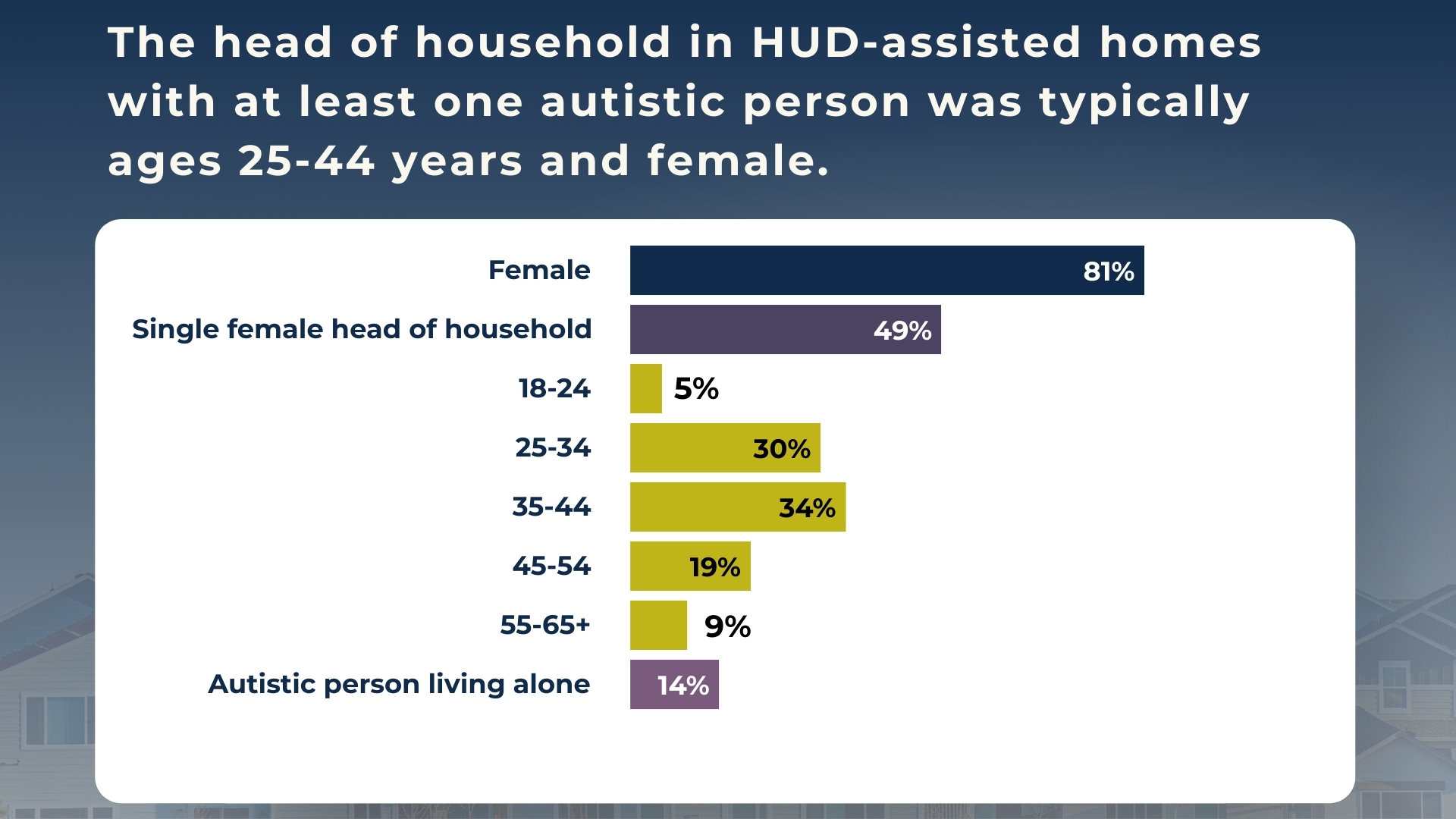
Most HUD-assisted households with at least one autistic household member were headed by a female.
Approximately half of HUD-assisted households with autistic members were headed by a single female. 12% of households had four or more children, and 11% had three or more adults living in the household. Nearly 70% of these households were headed by a person who was under the age of 45. Approximately 10% were headed by a middle-aged or aging caregiver over the age of 55 years.
FACT 8.
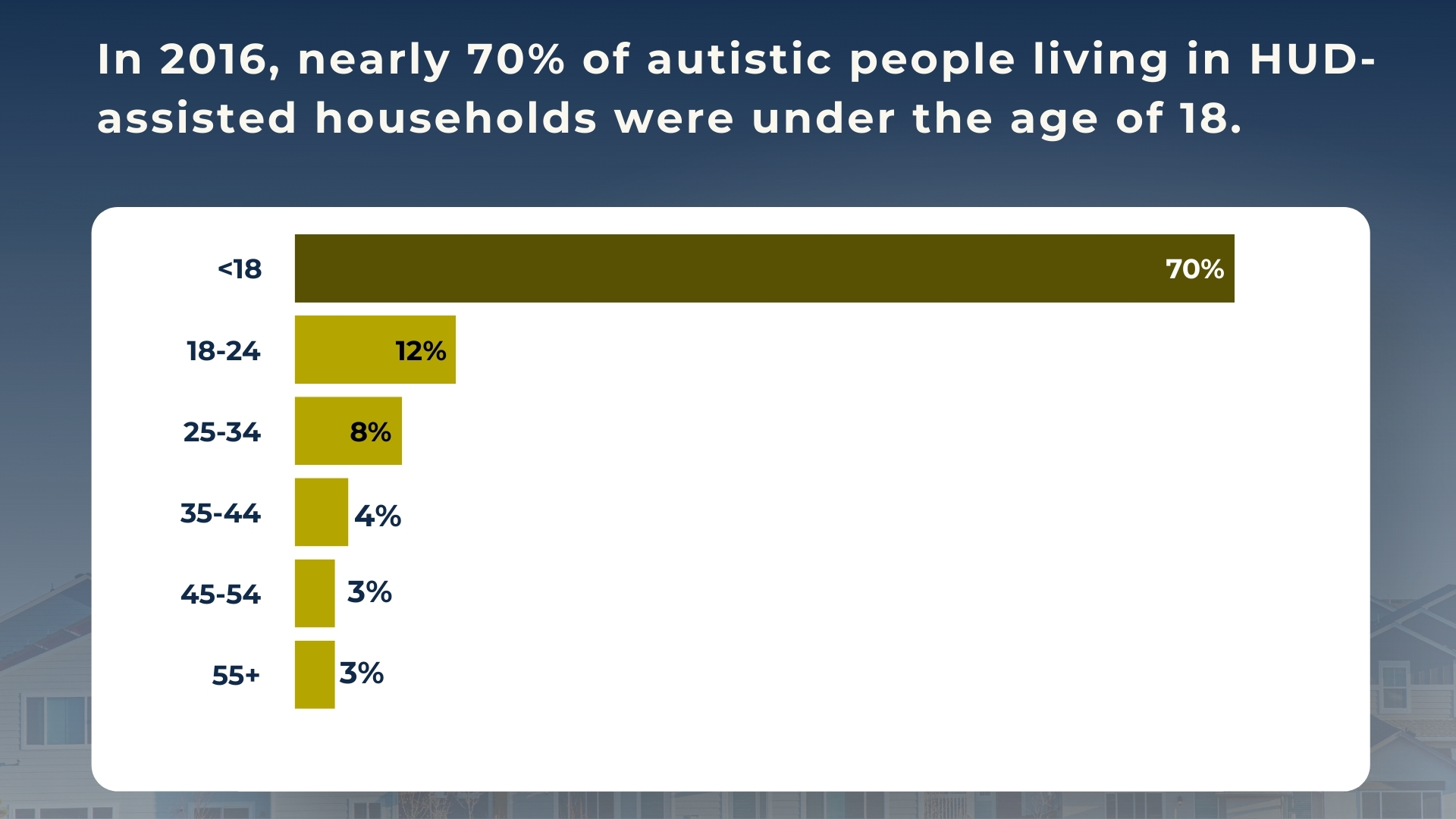
Children accounted for many of the autistic people who lived in HUD-assisted households.
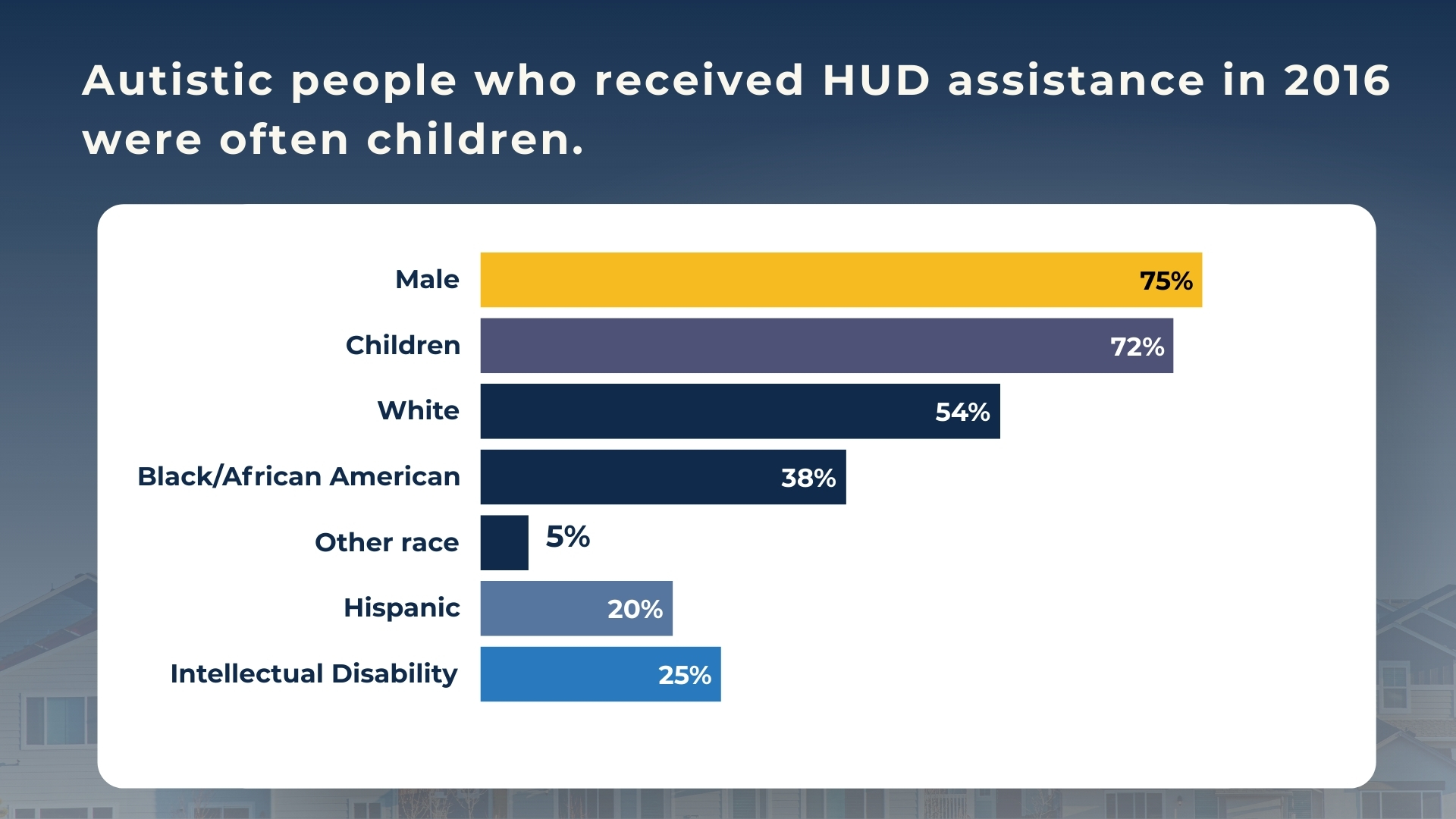
While many HUD-assisted autistic Medicaid enrollees were children, 28% were adults. And 14% of HUD-assisted autistic individuals were autistic adults who were living alone. As more autistic youth reach adulthood and apply for public services, it is possible that the proportion of autistic adults receiving HUD assistance may increase. However, it is also possible that there are fewer autistic adults receiving HUD assistance, because of the executive functioning skills needed to navigate the voucher application and housing search processes.
Nearly 40% of autistic people who received HUD assistance in 2016 were Black or African American race. This means that Black/ African American autistic people made up a disproportionate share of autistic people who received HUD assistance, meaning more people than expected, because only 13% of the U.S. population identified as Black or African American in 2016. This reflects a pattern that is present in HUD assistance overall.
We note that in the graph above, other race included Asian/Pacific Islander (1.25%), Native Alaskan/American (less than 1%), and multiple races (2.2%). Approximately 3% of data on race was missing.
FACT 9.
Lack of stable housing could contribute to worsened physical and mental health conditions among autistic people.
Autistic people have much higher rates of co-occurring physical and mental health conditions than the general population. Lack of access to stable housing can contribute to poor health. Individuals facing housing instability often delay health and mental healthcare (including necessary prescriptions) due to cost, have no place to go for care, or skip health appointments. Missed opportunities to address health issues through outpatient care can contribute to increased emergency department visits and poor health outcomes.
These challenges introduce and perpetuate a cycle of poor health and housing instability. Public housing officials are interested in interventions that increase access to health care among people who receive HUD assistance.
It is important to first understand how many autistic people live in households that receive HUD assistance.
FACT 10.
In 40% of cases, households with an autistic member were not identified in the HUD data as having a disabled member.
The data in this report is about people who were enrolled in Medicaid, had a diagnosis of autism, and were receiving HUD benefits. This data came from combined Medicaid and HUD data.
In the HUD data there is a record of whether any people within a household had a disability. In addition to the HUD data, we also used Medicaid data to more accurately identify whether a person was on the autism spectrum. People who were identified as autistic in the Medicaid data did not necessarily show up in the HUD data as having a disability.
In the HUD data, only 66% of households that we knew had at least one autistic member were coded as having a person with a disability in the household. In the HUD-assisted households that were correctly reported as having at least one person with a disability, 45% of these disabled (autistic) people were adults and 31% were children.
This seems to indicate that identification of disability, for autistic people, is under-reported in the HUD data, especially among households where autistic children lived. This could be because some children received an autism diagnosis after the family began receiving HUD benefits. Or it could be that some parents don’t share with HUD that their child has an autism diagnosis.
But this under-identification could help explain why people with autism and other disabilities are usually not included in planning for housing and community developments.
See Appendix: Data Notes for additional information.
Housing Policy
What are the key housing-related policies that intersect with disability?
There is no one federal housing policy that addresses the housing-related needs of people with developmental disabilities. Instead, various policies address different aspects of housing - such as affordability, modifications, and non-discrimination.
-
- The Fair Housing Act prohibits discrimination by entities that provide housing including landlords, real estate companies, and others. It prohibits localities from zoning housing in a way that is discriminatory against people with disabilities. And it requires that multi-family housing is built in an accessible and usable way.
-
- The Americans with Disabilities Act (ADA) prohibits state and local governments or public places from discriminating against people with disabilities. Regarding housing, the ADA said that people with disabilities should have the same opportunities to receive public programs, services, and activities. New and altered buildings must comply with accessibility standards.
- Section 504 of the Rehabilitation Act of 1973 prohibits discrimination against people with disabilities in federally assisted programs or activities such as public housing programs.
- The Frank Melville Supportive Housing Investment Act of 2010, a continuation of the National Affordable Housing Act of 1990, authorized and strengthened the Section 811 Supportive Housing for Persons with Disabilities program. One of its aims was to increase affordable rental units for
very-low income individuals with disabilities. - The Olmstead decision was a decision made by the Supreme Court which ruled that unjustified segregation of people with disabilities is discriminatory under the ADA. The Olmstead decision required states and localities move people with disabilities toward the least restrictive (most integrated) setting possible. This decision applied to housing in addition to schools, public facilities, transportation, and other settings.
In a future report, we will identify additional state and local innovations in housing solutions.
Specific Notes
Data Note #1. There are few published studies on housing assistance among autistic people, because it is difficult to find data on this topic. HUD data contains records about people with disabilities but does not identify specific disabilities like autism. Medicaid data contains claims associated with a diagnosis of autism but doesn’t contain information on housing.
Linking Medicaid claims with HUD data helps us identify autistic people who are using HUD assistance. Using linked data helps researchers and policymakers to better understand the connection between health and housing for autistic people, specifically.
Data Note #2. HUD data only collects disability status through a Yes/No question about the presence of disability for every member of a HUD assisted household. This is collected at the entry to housing assistance, and annual recertification. (Brucker 2018)
General Notes
Missing Data or Not Enough Data. We were unable to report statistics for some information that HUD collects, because there was not enough data reported to provide accurate and reliable data. For example, we did not report data on the percentage of households (with autistic members) who requested and received accessibility features. We were also unable to report the amount of time spent on HUD wait lists.
Identifying people on the autism spectrum. We used Medicaid claims data to identify individuals on the autism spectrum. We did this by locating individuals who had at least one inpatient claim or two outpatient claimsthat were associated with an autism diagnosis code. Previous studies have shown that this is an accurate way to identify autistic people in Medicaid claims data.
Details… Details
HUD’s definition of family includes, but is not limited to, the following, regardless of actual or perceived sexual orientation, gender identity, or marital status:
- A single person, who may be
- An elderly person, displaced person, disabled person, near-elderly person, or any other single person;
- An otherwise eligible youth who has attained at least 18 years of age and not more than 24 years of age and who has left foster care, or will leave foster care within 90 days, in accordance with a transition plan described in section 475(5)
(H) of the Social Security Act (42 U.S.C. 675(5)(H)), and is homeless or is at risk of becoming homeless at age 16 or older; or
- A group of persons residing together, and such group includes, but is not limited to:
- A family with or without children (a child who is temporarily away from the home because of placement in foster care is considered a member of the family);
- An elderly family (referring to the head of household, spouse, or aging persons living together, who are age 62 or older)
- A near-elderly family (referring to the head of household, spouse, or aging persons living together, who are ages 50- 62);
- A disabled family (referring to a disabled head of household, spouse, or people with disabilities living together)
- A displaced family (from a disaster or a government action); and
- The remaining member of a tenant family, meaning a family member who remains living in the unit when other family have left.
Source: “Eligibility Determination and Denial of Assistance” section of the Housing Choice Voucher Program Guidebook and the Public Housing Occupancy Guidebook.
The National Autism Indicators Report: Housing Assistance is a publication of the Policy and Analytics Center at the A.J. Drexel Autism Institute, Drexel University.
Program Director, Lindsay L. Shea, DrPH, MS
Authors: Anne M. Roux, MPH, MA; Kyle Chvasta, MSW; Conner Carlton, MSC; Dylan Cooper, MSEd; Wei-Lin Lee, MAS; Jonas Ventimiglia, MS; Lindsay L. Shea, DrPH, MS
All authors are affiliated with the Policy and Analytics Center.
Acknowledgements:
Graphic Design: Chisa Merriweather, BFA
Data Visualizations: Kyle Chvasta, MSW
Reviewers:
Maura Sullivan CEO, The Arc of Massachusetts
Cathy Boyle, Autism Housing Pathways
Oluwatobi Odugunwa, Director of Community Grant Program, Autistic People of Color Fund
Roux, Anne M.; Chvasta, K.; Carlton, C.; Cooper, D.; Lee, W.; Ventimiglia, J.; and Shea, Lindsay L. National Autism Indicators Report: Housing Assistance. Philadelphia, PA: Policy and Analytics Center, A.J. Drexel Autism Institute, Drexel University, January 2025.
Funding Acknowledgement: This project is supported by the Health Resources and Services Administration (HRSA) of the U.S. Department of Health and Human Services (HHS) under cooperative agreement UT6MC45902 Autism Transitions Research Project. The information, content, and/or conclusions are those of the authors and should not be construed as the official position or policy of, nor should any endorsements be inferred by HRSA, HHS, or the U.S. Government.
©2025 Drexel University and the authors. All rights reserved. The publication may be copied and disseminated without change in part or whole if appropriate acknowledgement and citation is given.